When we discuss the “big picture” of the maritime industry today, the conversation often relates to the shifting dynamics and traditional roles. We talk about the increase in women coming into the industry and welcoming them into traditionally male-dominated roles. But as any seafarer will tell you, a policy written in an office shoreside doesn’t always account for the realities of daily life at sea.
True progress shouldn’t just be judged by recruitment. It should be judged by retention, growth of opportunity, and the improvement of practical dignity. Ensuring that once recruited, female crew have an environment and support that is designed to help them stay.
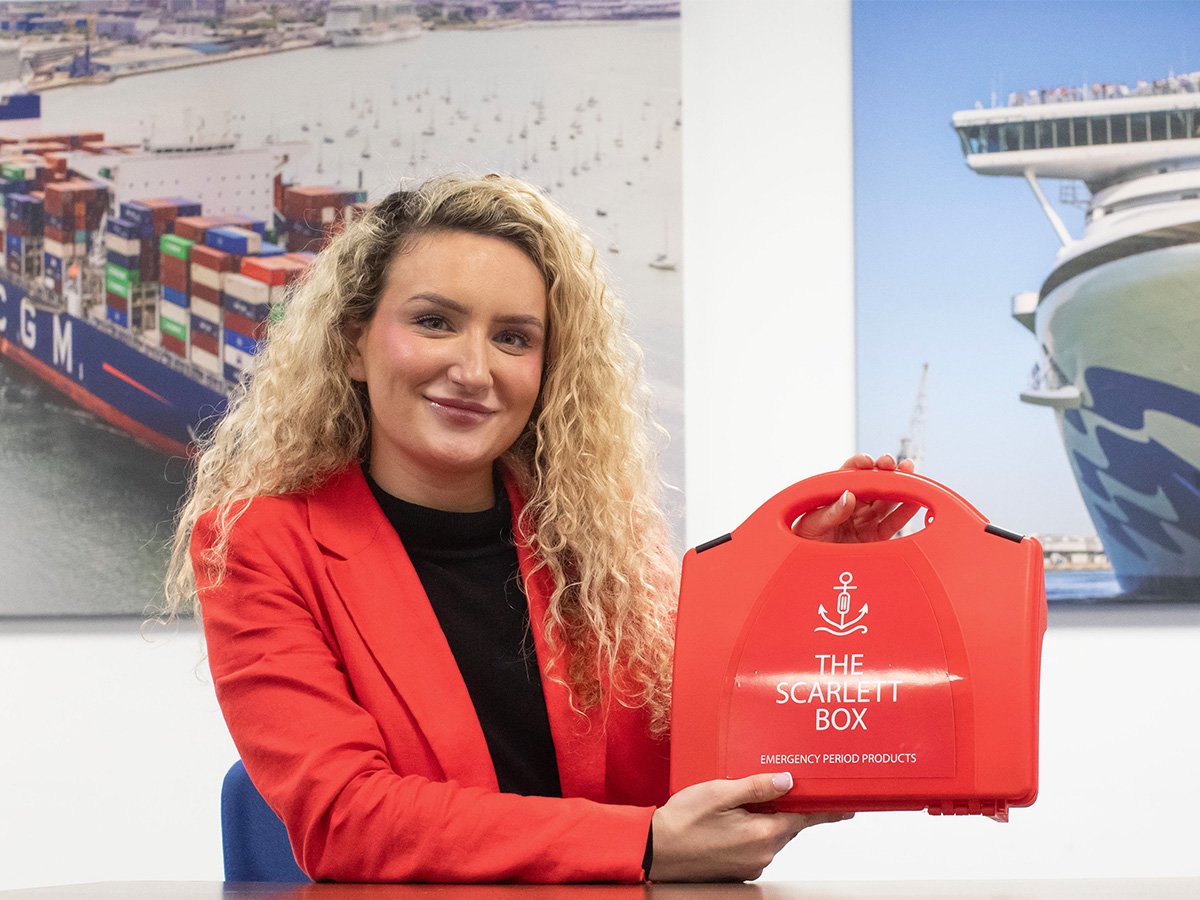
This is where Third Officer Scarlett Barnett-Smith’s business, The Scarlett Box, is making waves. Turning well-meaning policies into practical support. We talked to Scarlett about the realities of being active crew, the significant hurdles still to be tackled, and how The Scarlett Box is addressing the unseen gaps surrounding available female hygiene products.
The view from the bridge
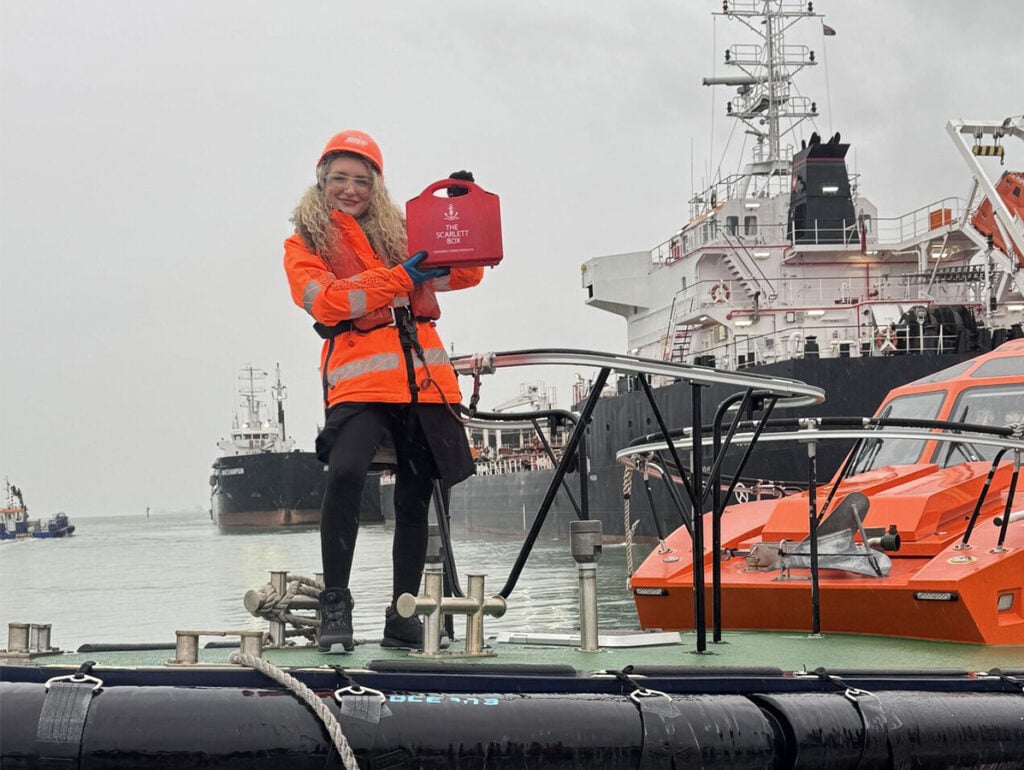
Scarlett’s journey to founder started at sea. Beginning her career as an apprentice at the Port of London Authority, she quickly progressed to deck officer, gaining first hand knowledge of operational realities.
This experience exposed her to the unique needs of female crew that often go unnoticed by male colleagues or shoreside management.
“You experience the day-to-day realities of life afloat early on, adapting to limited facilities and the fact that when you are onboard, you can’t just step out to a shop if you are missing something.”
As the first female deck cadet on the RRS Sir David Attenborough and winner of the Nautilus Bevis Minter Award, Scarlett’s credentials as a trailblazer are undeniable. What makes Scarlett’s approach unique is that she is still an active crew member.
She isn’t looking back at her time at sea; she is living it. Navigating the complexities and unique pressures of being sometimes the only female in a role that is traditionally male, surrounded by men.
“Being at sea keeps everything very real,” Scarlett explains. “I’m still working the same watch, dealing with the same operational demands and using the same facilities.”
“It highlighted how many small, practical needs of crew members can be overlooked simply because they’re a minority or it’s not visible to those working ashore.”

Making policy reality
One of the most significant hurdles in the maritime industry is that the active vessel duty environment has been traditionally designed for the industry majority: men. Certain needs like feminine hygiene have often not been accommodated simply because they are not part of the daily reality for decision-makers.
“Vessels don’t typically stock female hygiene products. If you unexpectedly start your period onboard and you don’t have products with you at your workstation, there’s often no easy solution.”
This unfortunate recurring reality faced by Scarlett (and many other women at sea) led to her developing her business, The Scarlett Box.
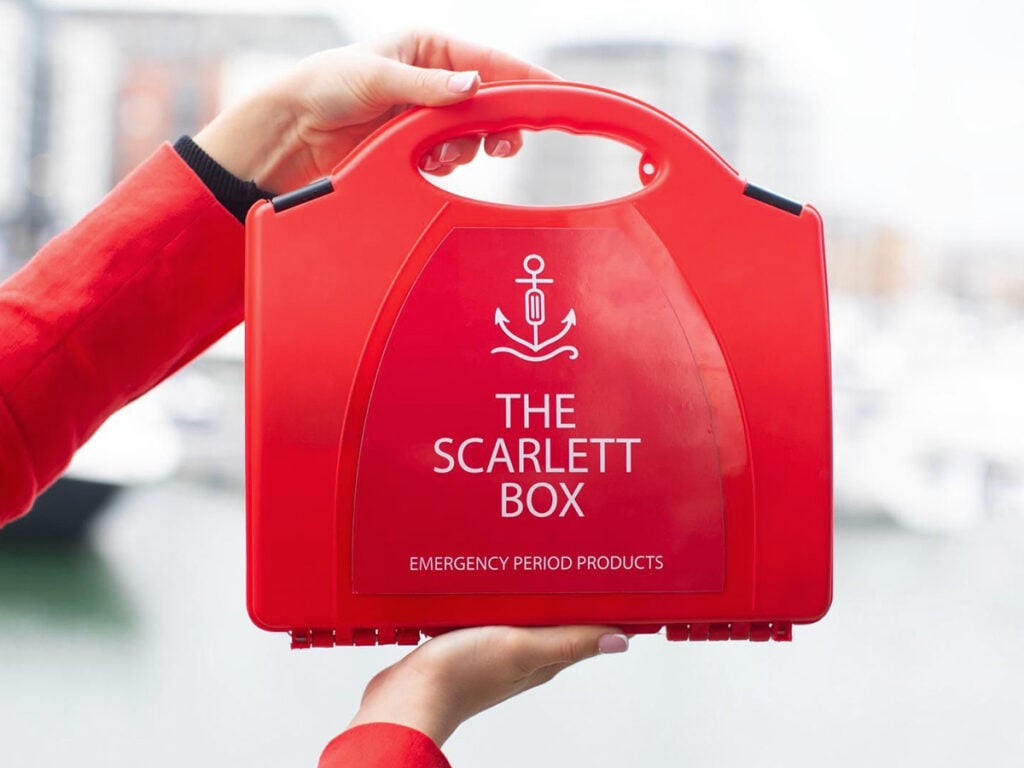
“I realised that something so basic and easy to solve was being overlooked. The idea behind The Scarlett Box was simply to place emergency feminine hygiene products in workplace restrooms onboard so they’re available exactly when and where they’re needed.”
The Scarlett Box is designed to be a low-cost, high-impact solution that is built on the realities of everyday seafarers.
- Designed for reality – the boxes are compact, hygienic and easy to install in limited shipboard spaces.
- Low cost, high impact – the ROI is straightforward, a minimal investment that significantly boosts crew welfare, morale and retention.
- Collaborative action – the immediate interest from companies like ABP shows the industry was waiting for a practical way to move from conversation into action.
Making a taboo subject a conversation
A key part of Scarlett’s mission is to provide the physical tools that back up high-level policies. Scarlett is ensuring that for the next generation of female seafarers, inclusion isn’t just a goal; it’s the standard they can expect the moment they step onboard. She is championing a shift where these provisions become a transparent, documented part of a vessel’s routine.
“It also makes a very taboo subject a conversation,” Scarlett explains.
By recommending that checks of The Scarlett Box are integrated into a vessel’s Planned Maintenance System (PMS), vessels can ensure that female hygiene is not just an afterthought but a permanent fixture that is ready for immediate use at all times. This integration bridges the gap between boardroom policy and everyday inclusive practice.
“It sends a very simple message, you’ve been considered.”
Creating a new standard
Looking ahead, Scarlett’s vision is to normalise these small actions until they are as standard as a first aid kit or safety equipment.
“The industry has made significant progress in recent years, particularly in terms of policies that support diversity and inclusion… However, practical support still has room to grow,” Scarlett says.
“Sometimes it’s not about major policy changes but about recognising everyday realities and making small adjustments that improve the working environment for everyone onboard. Whether that is PPE or female hygiene products.”
The horizon ahead
As The Scarlett Box looks toward the future, 2026 is set to be the company’s biggest year yet. Focused on building partnerships with shipping companies and the wider maritime industry, Scarlett aims to bring her practical solution to more vessels and fleets globally. The goal remains the same, move the industry from conversation into action.
Beyond her business, Scarlett’s hopes for the next generation of cadets are rooted in confidence and well-being.
“In five years, I hope it’s simply normal,” she says. “If The Scarlett Box can help remove even one small barrier for women working at sea, then it’s doing exactly what it was created to do.”
For aspiring female cadets, her advice is clear: stay confident in your abilities and prioritise your personal well-being. “A strong, supported crew member is always the best kind of seafarer.”
By adopting this mindset and providing the physical tools to back it up, Scarlett is laying the foundations to ensure that inclusion isn’t just a policy; it’s a physical reality for every woman at sea.
Connect with Scarlett
For more information on The Scarlett Box or Scarlett Barnett-Smith, please see her details below.
Website – https://www.thescarlettbox.co.uk/
LinkedIn – https://www.linkedin.com/company/the-scarlett-box/
Email – [email protected]